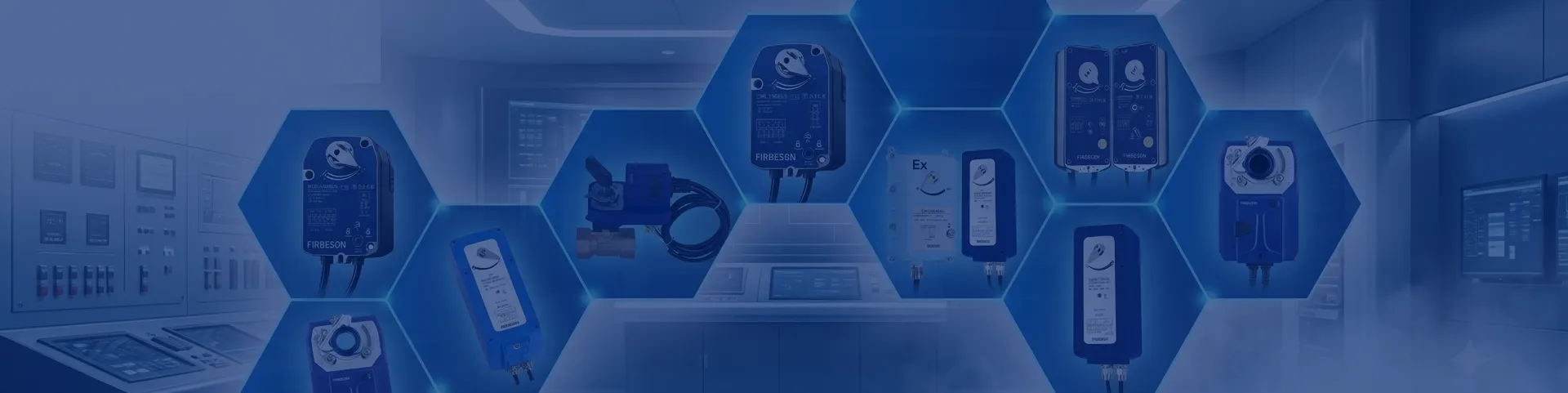
Fire & Smoke Damper Actuators in UK HVAC
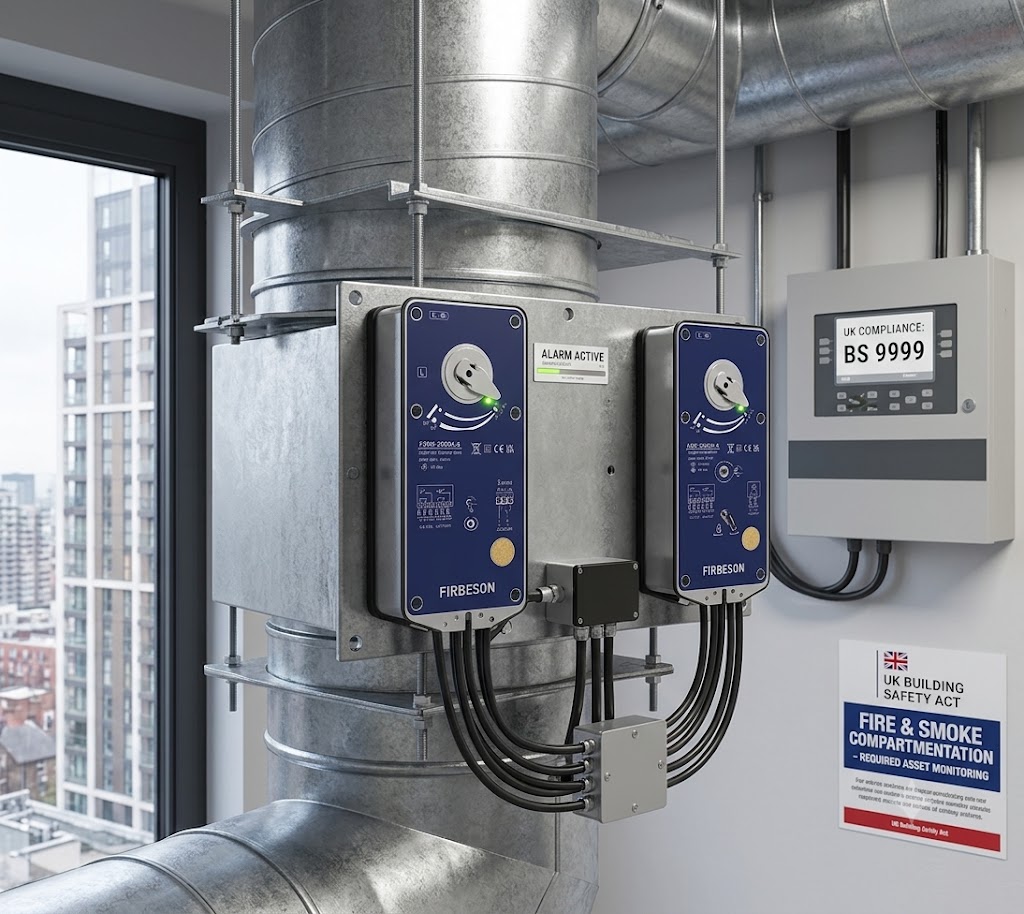
Fire & Smoke Damper Actuators in UK HVAC
Navigating UK fire safety compliance requires a precise approach to ductwork compartmentation. From compliance with Approved Document B to mandatory annual testing under BS 9999, learn how Firbeson’s certified motor-driven fire and smoke damper actuators ensure reliable life safety, smoke control, and Golden Thread auditability across commercial and residential developments.
Fire & Smoke Damper Actuators in UK HVAC: Meeting BS 9999 and Building Safety Standards
Following recent legislative shifts under the UK Building Safety Act 2022 and updated enforcement of Building Regulations, passive and active fire protection measures in commercial, residential, and healthcare buildings are facing unprecedented scrutiny. Central to this landscape is mechanical ventilation compartmentation: keeping air flowing during normal conditions while preventing fire, hot gases, and toxic smoke from travelling through ductwork during an emergency.
While traditional mechanical fusible link dampers were once the standard, modern UK building design heavily relies on motorized, combined fire and smoke damper actuators. Engineered to comply with rigorous standards like BS EN 15650, BS EN 1366-2, and BS 9999:2017, devices such as the Firbeson F30 Series deliver automated protection, immediate feedback, and seamless integration into Building Management Systems (BMS).
1. Life-Safety and Smoke Containment: The Dual Hazard
In a structural fire, smoke inhalation accounts for over 70% of fire-related casualties. Standard fire dampers equipped solely with a thermal link will not close until surrounding ambient temperatures reach approximately 72°C. By that time, toxic smoke can travel hundreds of meters through ductwork, compromising escape corridors and stairwells.
- Smoke Control (Cold Smoke Isolation): Combined fire and smoke actuators are interfaced directly with the building’s Fire Alarm System (FAS) or optical smoke detectors. Upon signal activation, the actuator uses its mechanical spring-return mechanism to snap the damper shut within 20 seconds, preventing cold smoke migration long before temperatures rise.
- Thermal Integrity Protection: If localized heat reaches critical levels, an integrated electro-thermal tripping device (e.g., 72°C or 95°C probe) breaks the circuit, ensuring total closure and maintaining the wall or floor’s designated fire compartmentation rating (e.g., EI 60 / EI 120 under BS EN 13501-3).
2. Key UK Regulatory Standards for Damper Actuators
Specifying engineers, mechanical contractors, and facilities managers in the UK must ensure that life-safety actuators align with specific statutory requirements and industry guidance:
| Standard / Regulation | UK Compliance Requirement | Role of Motorized Actuator |
|---|---|---|
| Approved Document B (Part B) | Requires ductwork penetrating compartment boundaries to maintain fire resistance. | Ensures automatic compartment seal during power disruption or fire alarm signal. |
| BS 9999:2017 & BESA TR19 / DW145 | Mandates annual testing of spring-operated and motorized dampers (6 months for high risk). | Integrated auxiliary microswitches (<5° and <85°) allow remote automated testing and BMS logging. |
| BS EN 15650 / BS EN 1366-2 | Harmonized product testing for fire dampers installed in standard UK walls and floors. | Provides verified torque, timing, and cycle durability under elevated temperatures. |
| Building Safety Act (Golden Thread) | Demands auditable digital records of safety-critical assets throughout the building lifecycle. | Enables real-time position reporting to digital BMS control panels for continuous compliance audit trails. |
3. Real-World Applications Across UK Sectors
The operational demands on fire and smoke damper actuators vary significantly depending on the facility type:
- High-Rise Residential Blocks & Mixed-Use (BS 9991 Alignment): Smoke evacuation systems rely on motorized dampers operating in dedicated smoke shafts. Actuators open on designated floors to extract smoke while keeping dampers on unaffected floors tightly shut.
- Healthcare Facilities (HTM 03-01 Compliance): Hospitals demand rigorous infection control and compartmentation. Motorized actuators integrated with BMS monitoring allow remote functional testing without disrupting clinical spaces or requiring physical ceiling access.
- Commercial Offices & Public Venues: Multi-zone HVAC ductwork passing through structural fire walls relies on spring-return actuators (24V or 230V) to immediately isolate zones upon fire detection, preserving main emergency escape routes.
4. Why Choose Firbeson Fire & Smoke Actuators?
Firbeson’s dedicated fire and smoke actuators (such as the F30 series) are specifically manufactured to meet international standards (CE, UKCA, UL, ATEX) and heavy-duty life-safety specs:
- Fail-Safe Mechanical Spring Return: Operates reliably without electrical power, returning dampers to their safe position in less than 20 seconds.
- Dual Auxiliary Switches: Built-in position indicator switches (<5° and <85°) provide instant visual and digital confirmation of damper status.
- Robust Die-Cast Construction: IP54 / IP65 enclosures engineered to withstand harsh ductwork conditions and elevated environmental temperatures.
Maintain Your Golden Thread of Compliance: In an era where fire safety compliance is strictly enforced across the UK, specified hardware must offer uncompromised reliability. Discover how Firbeson’s certified fire and smoke actuators simplify installation, annual testing, and building sign-off.